(PhysOrg.com) -- New research has shown that it is possible and affordable for the world to achieve 100 percent renewable energy by 2030, if there is the political will to strive for this goal.
1.21.2011
Is 100% renewable energy realistic? Apparently so...


Natural Defense: Blood vessels battling cancer cells
MIT scientists have discovered that endothelial cells, which line the blood vessels, secrete molecules that suppress tumor growth and keep cancer cells from invading other tissues, a finding that could lead to a new way to treat cancer.
One word of advice...PLASTICS
Later this year, Hewlett-Packard researchers say, they expect to deliver to the U.S. Army a working prototype of what they're calling a "Dick Tracy wristwatch" - a lightweight, wearable device that soldiers in the field can use to view digital maps and other data on a flexible plastic screen that won't shatter or crack like glass.
FLEXIBLE DISPLAYS:
-Advantages: Flexible plastic displays can be thinner, lighter and more durable than glass, which can lower manufacturing costs, increase product life and make new designs possible.
-Applications: First will likely be smart phones, tablets and notebook computers. It could eventually be used in clothing, wall displays and other products that can be curved or rolled.
-Challenges: Requires new manufacturing processes and transistor materials. Hewlett-Packard is working on a method for imprinting and etching spools of plastic film; others are working with sheets of plastic temporarily bonded to glass.
What's the 'carbon footprint' of a pair of jeans?
Companies are developing a standard measure for products' carbon emissions in hopes of simplifying decisions for consumers.
1.20.2011
Duct tapes replacement as a fix-all...UV light
A new polymer material that can repeatedly heal itself at room temperature when exposed to ultraviolet light presents the tantalizing possibility of products that can repair themselves when damaged. Possibilities include self-healing medical implants, cars, or even airplane parts.
Getting fat by going to the gym
TIME article discussing the adverse effects of exercise. Why it can lead to weight-gain instead of weight-loss.
1.12.2011
Don't swat that pesky hornet... study it!
As every middle-school child knows, in the process of photosynthesis, plants take the sun's energy and convert it to electrical energy. Now a Tel Aviv University team has demonstrated how a member of the animal kingdom, the Oriental hornet, takes the sun's energy and converts it into electric power -- in the brown and yellow parts of its body -- as well.
 In the course of their research, the Tel Aviv University team also found that the yellow and brown stripes on the hornet abdomen enable a photo-voltaic effect: the brown and yellow stripes on the hornet abdomen can absorb solar radiation, and the yellow pigment transforms that into electric power.
In the Sahara desert, sand + sun = solar power
The Sahara Solar Breeder Project (a joint project by universities in Algeria and Japan) aims to begin by building a silicon manufacturing plant in the desert to transform silica in the sand into silicon of sufficiently high quality for use in solar panels. Solar power plants will be constructed using the solar panels, and some of the electricity generated will supply the energy needed to build more silicon plants to produce more solar panels, to produce more electricity...

Image credit: Diginfo TV
Image credit: Diginfo TV
Sahara desert project aims to power half the world by 2050
Shh... Listen...Can you hear that? It's the sound of pain-free disease diagnosis
A new breakthrough in imaging technology using a combination of light and sound will allow health care providers to see microscopic details inside the body. Access to this level of detail potentially eliminates the need for some invasive biopsies, but it also has the potential to help health care providers make diagnoses earlier than ever before -- even before symptoms arise.
Unlike common ultrasound techniques that send in a sound wave and "listen" for the echo, PAT (photoacoustic tomography) sends in a light beam that excites and warms certain proteins, such as the hemoglobin in red blood cells. The minutely heated proteins emit a sound wave that is then detected by the ultrasound transducer.
1.11.2011
Look deep into my eyes...
 Lenses that monitor eye health are on the way, and in-eye 3D image displays are being developed too – welcome to the world of augmented vision
1.09.2011
‘Convergence’ better than 'Divergence' in scientific research
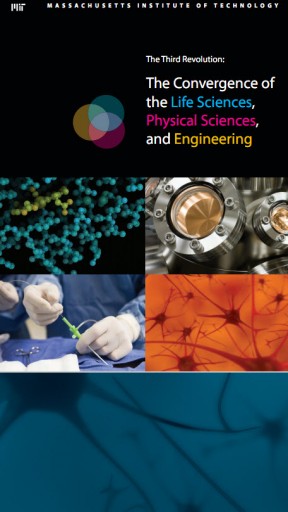
“Convergence is a broad rethinking of how all scientific research can be conducted, so that we capitalize on a range of knowledge bases, from microbiology to computer science to engineering design,” MIT Institute Professor and Nobel Laureate Phillip Sharp, one of the report’s authors, told the AAAS forum.
“It entails collaboration among research groups but, more deeply, the integration of disciplinary approaches that were originally viewed as separate and distinct. This merging of technologies, processes and devices into a unified whole will create new pathways and opportunities for scientific and technological advancement.”
Sharp and the other MIT authors say that convergence offers the potential for a “Third Revolution” in biomedicine that may be as profound as the two life-science revolutions that preceded it: the breakthroughs accompanying the development of molecular and cellular biology, and the sequencing of the human genome, which has made it possible to identify the genetic foundations of many diseases.
1.08.2011
Killing tumors with micelles (That's 'my-cells' not 'your-cells')
A new nanodelivery system is able to sneak cancer treatments past the defenses of drug-resistant tumor cells—offering hope to many cancer patients who benefit little from existing drug treatments.
Researchers at the University of Tokyo designed small soapy clusters of molecules, called micelles, to carry drugs into tumor cells and release their cargo inside. The molecules harness the cell's internal transport system to get close to their target—the cell's DNA.
Genetic modification of microbes...there's an app for that
Genetically modified microbes could perform many useful jobs, from making biofuels and drugs, to cleaning up toxic waste. But designing the complex biochemical pathways inside such microbes is a time-consuming process of trial and error.
Christopher Voigt, an associate professor at the University of California, San Francisco, hopes to change that with software that automates the creation of "genetic circuits" in microbes. These circuits are the pathways of genes, proteins, and other biomolecules that the cells use to perform a particular task, such as breaking down sugar and turning it into fuel. Voigt and colleagues have so far made basic circuit components in E. coli. They are working with the large California biotechnology company Life Technologies to develop software that would let bioengineers design complete genetic circuits more easily.
Designing a microbe for a particular task would then be much like writing a new computer program, says Voigt. Just as programmers do not have to think about how electrons move through the gates in an integrated circuit, he says, biological engineers may eventually be able to design circuits for genes, proteins, and other biomolecules at a level of abstraction. "If we apply computational processes to things that bacteria can already do, we can get complete control over making spider silk, or drugs, or other chemicals," he says.
1.06.2011
Screw plastic, I want my joints au natural
University of Missouri and Columbia University researchers have found a way to create biological joints in animals, and they believe biological joint replacements for humans, using a patient’s own cells, aren’t far away.
Biological joints could replace artificial joints | KurzweilAI
Biological joints could replace artificial joints | KurzweilAI
Streamlining the delivery of vaccine from the lab to the needy
Nicaragua is the first developing country to start immunising children with a new pneumonia vaccine this month (12 December), the same year the vaccine was released in the United States.
This is the first vaccine purchased by the Advance Market Commitment (AMC) mechanism, launched in June 2009, which brings donors and pharmaceutical companies together to speed up access to new vaccines in the developing world.
12.23.2010
12.22.2010
Stem cell therapy to heal a broken heart
Over the last decade, scientists have experimented with using stem cells to heal or replace the scarred tissue that mars the heart after a heart attack. While the cells do spur some level of repair in animals, human tests have resulted in modest or transient benefits at best. Now researchers have developed a new kind of biological sutures, made from polymer strands infused with stem cells, that might help surmount two major obstacles to using stem cells to heal the heart: getting the cells to the right spot and keeping them there long enough to trigger healing.
Flu... there's a shot for that. Broken bone...there's a shot for that too
Today, a broken hip usually means surgery and extensive rehab. But what if all you needed was an injection and a shorter recovery period? That's the vision that inspires Thomas Webster, an associate professor of engineering at Brown University.
Webster has developed a nanomaterial that quickly solidifies at body temperature into a bone-like substance. This week, Brown announced a deal with medical device maker Audax Medical of Littleton, Massachusetts, to further develop the material and launch trials in animals.
Skip the biopsy...ask for laser beams instead
Scientists at Harvard University have developed a noninvasive imaging technique that captures images at the molecular level so quickly that they can "watch" red blood cells move through the capillaries of a live mouse. The system uses two laser beams set at different frequencies to excite specific types of molecules in the skin. A custom-designed detector picks up the excited molecular signal and translates it into an image.
With such a capability, says Ji-Xin Cheng, associate professor of biomedical engineering at Purdue University, doctors may be able to identify other diseases that manifest on the surface of organs other than skin.
"Some cancers start in the epithelial layer, or the surface of tissues, like colon cancer," says Cheng. "Diagnosing such cancers could be a good application for a system like this."
Subscribe to:
Comments (Atom)